
We stand with Ukraine
Elysium+ was born in Chernihiv, Ukraine, and our work has never been separate from the war that has tried to erase our communities since 2014. We write this not as distant observers, but as a network rooted in the places where people were besieged, forced into basements, and made to bury their neighbours in their own gardens. Every claim on this page links to a source you can check yourself.
Since 2014
A campaign of destruction, not a single invasion
Russia's war against Ukraine did not start in February 2022. It began in February–March 2014, when Russian soldiers without insignia seized Crimea's parliament and military bases in the aftermath of Ukraine's Revolution of Dignity, staged a referendum the international community rejected as illegal, and annexed the peninsula. Weeks later, Russian-backed forces seized territory across Ukraine's Donbas region. The UN human rights office estimates 14,200–14,400 people were killed in that conflict between April 2014 and the end of 2021 — before the full-scale invasion even began — and hundreds of thousands more were displaced from their homes.
How the world names this
Genocide and terror
Under the 1948 Genocide Convention, genocide means acts like killing, causing serious harm, deliberately inflicting conditions aimed at a group's destruction, or forcibly transferring children — committed with intent to destroy a national group in whole or in part. In May 2022, the New Lines Institute for Strategy and Policy and the Raoul Wallenberg Centre for Human Rights, backed by 35 international genocide and atrocity-crime experts, published a legal analysis finding reasonable grounds that Russia has directly and publicly incited genocide against the Ukrainian people, and identified a serious risk of genocide under the Convention. On 27 April, the Parliamentary Assembly of the Council of Europe went further and formally recognised the forced deportation of Ukrainian children to Russia as genocide, by a vote of 87 to 1.
A state that uses terror
Recognised as a state sponsor of terrorism
On 23 November 2022, the European Parliament adopted a resolution recognising the Russian Federation as a state sponsor of terrorism and a state that uses terrorist methods, by 494 votes to 58 with 44 abstentions, in response to deliberate attacks on civilians and the systematic destruction of civilian infrastructure. The resolution states these atrocities constitute war crimes and acts of terror against the Ukrainian people. Lithuania, Latvia, Estonia and Poland have each gone further and formally designated Russia a state sponsor of terrorism in their own national parliaments. We stand firmly behind this position — not as a slogan, but as a sober description of what our friends and communities have lived through.
Our home region
What this means in Chernihiv Oblast
Chernihiv Oblast, where Elysium+ was founded, was among the first regions attacked and besieged in the opening weeks of the full-scale invasion. Russian forces encircled Chernihiv city, cut off evacuation routes, and bombed residential areas. A bombing on 3 March 2022 killed 47 people — Amnesty International and Human Rights Watch both described the strike as a likely war crime. On 16 March, a Russian attack on civilians queuing for bread killed at least 18 more. On 23 March, the last road bridge out of the city was destroyed, cutting off the evacuation of the wounded and the delivery of humanitarian aid.
The siege of Chernihiv city

Yahidne: 28 days in a school basement
On 3 March 2022, Russian soldiers occupying the village of Yahidne, Chernihiv Oblast, forced 368 residents — including 80 children, the youngest six weeks old — into the local school's basement, giving each person roughly 50cm of space, for 28 days without adequate food, medical care or ventilation. Ten people died underground; Ukrainian prosecutors have since charged Russian soldiers over those deaths. Stories like this are not distant headlines to us — they are the reality of the communities we work with.
Documented across the oblast — and still happening
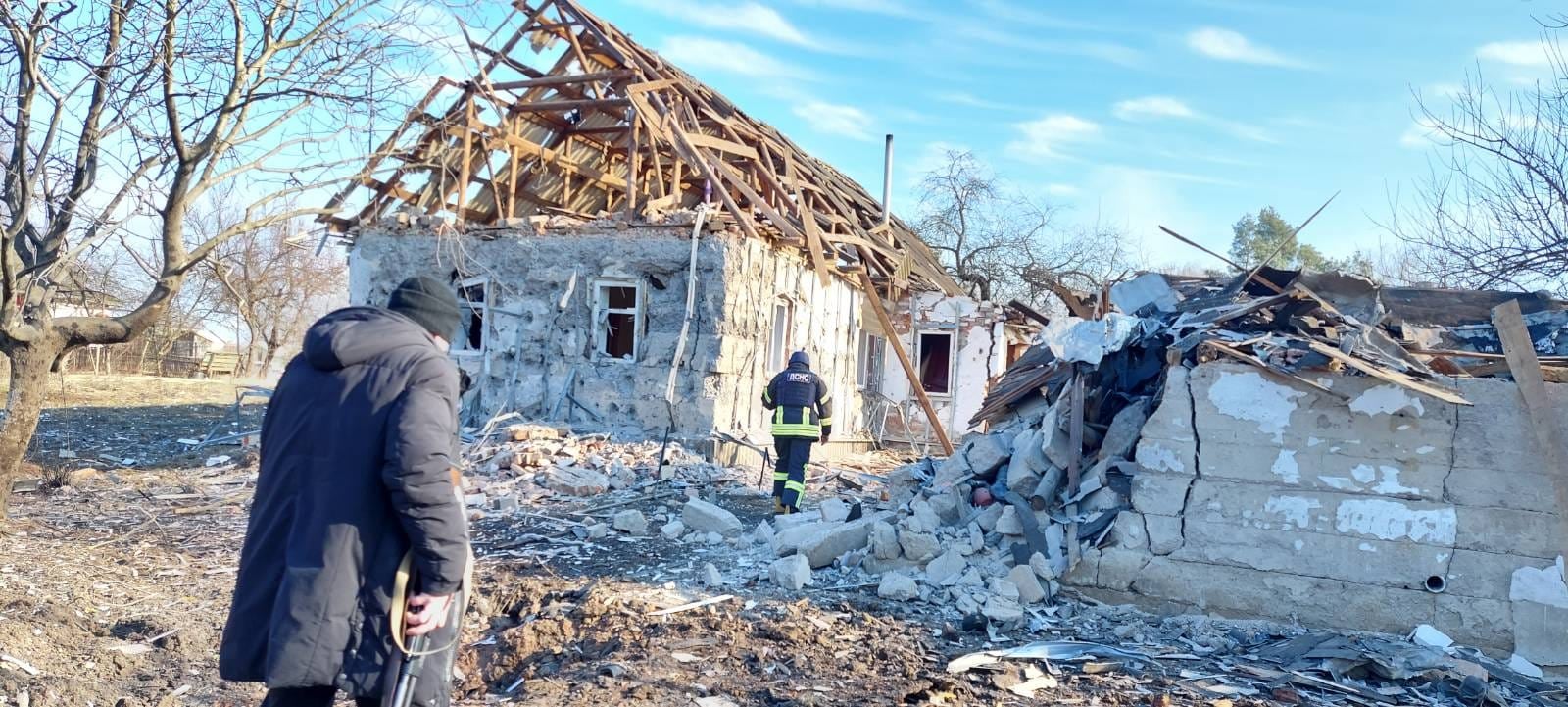
The UN Human Rights Monitoring Mission in Ukraine (OHCHR) has verified unlawful killings, including summary executions, of civilians in more than 30 settlements across Chernihiv Oblast under Russian military control in 2022 — part of a wider pattern documented across more than 100 towns and villages in the Kyiv, Chernihiv and Sumy regions. It has not stopped: drone and missile strikes on homes, schools and civilian infrastructure across the oblast continue today.

The scale of harm
Lives, homes, and a country's future
The UN Human Rights Monitoring Mission has verified at least 16,431 civilian deaths since 24 February 2022, and stresses that the true number is significantly higher, since it can only count what it can independently confirm. The World Health Organization has verified more than 3,000 attacks on healthcare in Ukraine — hospitals, maternity wards, ambulance teams and pharmacies among them. The Kyiv School of Economics Institute, working with Ukraine's Ministry for Development of Communities and Territories, estimates direct war damage to infrastructure at roughly $170 billion as of November 2024, with 236,000 residential buildings damaged or destroyed and Chernihiv named among the regions hit hardest. Nearly 5.9 million Ukrainians are refugees abroad and a further 3.7 million are displaced inside the country — together, close to a quarter of Ukraine's pre-war population forced from their homes.
Children taken, futures stolen
The fate of Ukraine's children
Ukraine's National Information Bureau has registered nearly 20,000 Ukrainian children forcibly deported or displaced to Russia or Russian-occupied territory, separated from their families and communities — of those, around 17,000 are individually identified, with their place of origin and current location known. In March 2023, the International Criminal Court issued arrest warrants for Vladimir Putin and Russia's children's rights commissioner, Maria Lvova-Belova, over the war crime of unlawfully deporting these children. As above, the Parliamentary Assembly of the Council of Europe has gone further and recognised these deportations as genocide outright.
Accountability, underway but not enough
Justice on the horizon, not yet protection
Ukraine has twice accepted the International Criminal Court's jurisdiction to investigate atrocity crimes on its territory, covering alleged war crimes, crimes against humanity and genocide since November 2013. Ukraine's own Prosecutor General's Office has registered more than 190,000 suspected war crimes cases. These processes matter — but for people living under bombardment, occupation or displacement right now, accountability is still a promise on the horizon, not yet protection in their daily lives.
Ukraine's Prosecutor General's OfficeNot abstract to us
This is our team's daily reality
This war is not history: people across Ukraine live with the threat of drone and missile strikes as part of daily life, checking for alerts before school runs, work, or sleep. You can see this in real time — alerts.in.ua tracks live air raid alerts across every region of Ukraine. We're still working on collecting and sharing our Ukrainian team's own words here directly — write to us if you'd like to hear from them.
See live air raid alertsFour countries, one network rooted in Ukraine
Why we speak plainly
Elysium+ is a European youth network rooted in Chernihiv, working across Ukraine, Poland, Italy and Germany. We build safe spaces where young people — many of them living through war, exile or return — can organise, heal, and claim their right to shape their communities' future. We cannot talk about "mobility" and "participation" without naming the violence that has tried to strip Ukrainians of both. Euphemisms do not protect anyone from missiles, deportations or torture; they only make it easier for outsiders to look away.

Slava Ukraini — Слава Україні
Supporting Elysium+ means supporting youth work that continues in Chernihiv and across our network even under bombardment and grief — a generation of young people who insist that Ukrainians have the right not just to survive, but to live freely, safely and with dignity.